Civil rights and political rights protect the freedoms people need to live with dignity, make personal choices, and participate in public life. Civil rights protect individuals against unfair treatment and unjustified interference, while political rights allow people to influence government decisions and hold public officials accountable. Together, they help prevent the misuse of power and create conditions in which individuals can exercise their freedoms safely.
However, these rights are not protected simply because they appear in a constitution or legal document. Their practical value depends on enforceable laws, independent courts, accountable institutions, and accessible ways to challenge violations. Understanding how civil rights political rights operate in practice helps individuals recognize discrimination, respond to restrictions on freedom, and understand the responsibilities of public authorities.
The Distinct Purposes of Civil Rights and Political Rights
Civil rights and political rights are closely connected, but they serve different purposes. Civil rights generally protect personal liberty, equality before the law, privacy, freedom of expression, and protection against discrimination. Political rights focus on participation in public affairs, including voting, standing for public office where eligible, joining political organizations, and influencing government policy.
The distinction becomes clearer when considering everyday situations. An employee facing discrimination because of a protected characteristic may rely on civil rights protections. A citizen prevented from voting because of an unlawful restriction may face a violation of political rights. Both situations involve individual freedom, but the legal interests and remedies may differ.
The two categories also overlap. Freedom of expression can be a civil liberty and an essential condition for political participation. People need to exchange ideas, criticize government decisions, organize campaigns, and discuss public issues before they can participate meaningfully in democratic life.
Civil rights political rights therefore work as complementary safeguards. Civil rights help create an environment where individuals can speak, associate, and act without arbitrary interference. Political rights give them channels to influence the institutions that make and enforce laws.
These categories are not identical in every legal system. Constitutional language, legislation, court decisions, and international agreements influence how particular rights are defined and enforced. Some rights also have different eligibility rules depending on citizenship, age, residency, or other lawful conditions. Understanding the relevant legal framework is essential when assessing a specific claim.
Civil Rights as Protection Against Discrimination and Abuse
Civil rights establish legal protections against unequal treatment and unjustified restrictions on personal freedom. They help ensure that government agencies, employers, public institutions, and other regulated organizations follow applicable legal standards. The exact obligations depend on the jurisdiction and the relationship involved.
Equality before the law is a central principle. Public authorities should not apply legal rules arbitrarily or treat people differently without a lawful and defensible basis. Anti-discrimination laws may also prohibit unfair treatment in areas such as employment, education, housing, and access to public services.
Civil rights protections extend beyond discrimination. Depending on the legal system, they may include safeguards against arbitrary detention, protections for privacy, freedom of religion, freedom of expression, and access to fair legal procedures. These protections limit the ability of powerful institutions to interfere with individuals without proper justification.
For example, imagine a public university refusing admission to a qualified applicant solely because of a legally protected characteristic. Depending on the applicable law and circumstances, the applicant may have grounds to challenge the decision through an administrative complaint, equality body, or court. The process creates a way to examine the institution’s conduct against legal standards.
Civil rights political rights also depend on practical access to remedies. A right offers limited protection if a person cannot report a violation, obtain legal assistance, or receive a fair hearing. Effective systems therefore need clear complaint procedures, impartial decision-makers, and remedies that address unlawful conduct.
Political Rights and Meaningful Participation in Public Affairs
Political rights allow eligible individuals to participate in decisions that shape their communities and countries. Voting is one of the best-known examples, but political participation includes much more than elections. It can involve joining a political party, supporting a campaign, contacting representatives, attending public consultations, or peacefully expressing opposition to government policy.
These rights help connect public authority with the people affected by its decisions. Elections allow voters to select representatives and remove them through lawful processes. Public debate helps expose competing ideas, while civic organizations can bring attention to issues that individual citizens may struggle to address alone.
Political rights do not mean that every person can exercise every political entitlement under identical conditions. Voting age requirements, citizenship rules, candidate eligibility standards, and election procedures vary. Such restrictions must be assessed under the relevant constitutional and legal framework, including any applicable protections against arbitrary exclusion.
Voting and Fair Electoral Participation
Voting gives eligible citizens a formal way to influence political representation. A fair electoral system requires more than allowing people to enter a polling station. Voters need meaningful access to registration, understandable information, secure procedures, and reasonable protection against intimidation or unlawful discrimination.
Consider a voter whose name is missing from an electoral register. The problem may result from an administrative error rather than deliberate exclusion, but the consequences can still be serious. Accessible verification and correction procedures help prevent avoidable barriers from denying eligible people their vote.
Election integrity also depends on transparency and accountability. Clear counting procedures, independent oversight, lawful challenges, and accurate public information help maintain confidence in results. When people believe their votes will be counted fairly, they have stronger reasons to participate.
Freedom of Association and Public Expression
Political participation depends on the ability to organize with others. Political parties, trade unions, advocacy groups, community organizations, and civil society associations can help people express shared concerns and propose changes. Freedom of association makes collective action possible.
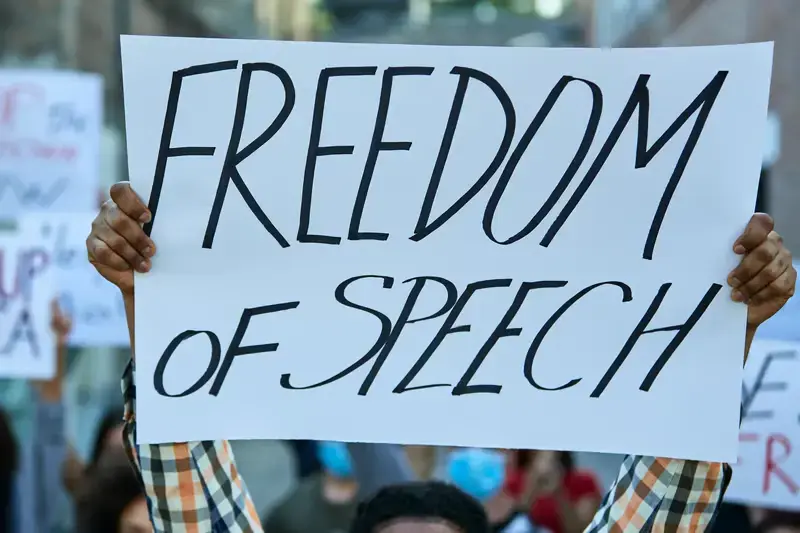
Freedom of expression supports this process by allowing individuals to criticize policies, question leaders, and discuss public problems. Peaceful demonstrations and public meetings can bring neglected issues into public debate. These activities may be subject to lawful restrictions in specific circumstances, but restrictions should not be used simply to silence legitimate disagreement.
Civil rights political rights reinforce one another here. Association and expression help people organize politically, while political participation creates opportunities to influence the laws and institutions responsible for protecting civil liberties.
Constitutional Guarantees and International Human Rights Standards
Constitutions often establish fundamental rights and define limits on government authority. They may protect equality, due process, personal liberty, expression, religion, assembly, and participation in public affairs. The legal effect of these provisions depends on the constitutional system and how courts interpret and enforce them.
Some constitutions allow individuals to bring rights claims directly before courts. Others require particular administrative procedures or provide different routes for challenging government action. Statutes may supply additional protections, clarify institutional duties, and establish penalties or remedies for violations.
International human rights instruments provide another important framework. The Universal Declaration of Human Rights, adopted by the United Nations General Assembly in 1948, recognizes rights relating to equality, liberty, expression, assembly, and participation in government. Although the declaration itself is not a treaty, it has played a major role in shaping international human rights principles.
The International Covenant on Civil and Political Rights, which entered into force in 1976, establishes binding obligations for states that are parties to it. It addresses matters including freedom of expression, peaceful assembly, association, fair trial protections, and political participation. Its implementation operates alongside domestic legal systems and applicable international monitoring processes.
These standards do not automatically produce identical legal outcomes in every country. Treaty commitments, domestic incorporation, constitutional rules, reservations, and enforcement mechanisms can affect how protections operate. When examining civil rights political rights in a particular case, it is important to identify the relevant jurisdiction and distinguish international standards from directly enforceable domestic law.
How Courts and Public Institutions Enforce Individual Liberties
Legal protections become meaningful when institutions can identify violations and provide appropriate remedies. Courts often play a central role by interpreting laws, reviewing government decisions, and deciding disputes involving constitutional or statutory rights. Independent judges help ensure that public officials remain subject to the law.
Other institutions contribute to enforcement. Human rights commissions, ombudsman offices, election authorities, equality bodies, and regulatory agencies may investigate complaints or oversee compliance within their legal mandates. Their powers vary, but they can provide routes for addressing problems without relying exclusively on lengthy court proceedings.
Judicial Review and Access to Remedies
Judicial review allows courts to examine whether certain government actions comply with constitutional or legal requirements. Depending on the jurisdiction, a court may invalidate an unlawful decision, order an authority to reconsider a matter, prevent an ongoing violation, or award another appropriate remedy.
Access to justice matters because legal procedures can be difficult to understand and expensive to use. Filing deadlines, evidence requirements, court fees, and representation costs may prevent individuals from pursuing legitimate claims. Legal aid, clear procedural guidance, and accessible complaint systems can reduce these barriers.
Anyone who believes their rights have been violated should preserve relevant documents, record important dates, and identify the authority or organization responsible. They should then review the available complaint process and applicable deadlines. The correct procedure depends on the facts and local law, so general information should not replace advice from a qualified legal professional when a serious dispute is involved.
Accountability Beyond the Courts
Courts cannot protect rights effectively without support from other institutions. Legislatures establish legal safeguards, election bodies administer voting procedures, public agencies implement regulations, and independent media can investigate misconduct. Civil society organizations may help affected individuals understand their options and draw attention to recurring problems.
Public transparency also strengthens accountability. Clear reasons for official decisions, accessible records, independent investigations, and meaningful oversight make it harder for unlawful conduct to remain hidden. These measures can identify systemic problems rather than addressing each complaint in isolation.
Effective protection of civil rights political rights requires cooperation among institutions while preserving their independence. If the body accused of wrongdoing controls every stage of the complaint process, impartial review may become difficult. Independent oversight and clear appeal mechanisms help reduce this risk.
Modern Challenges to Civil Rights and Political Rights
Legal protections face new pressures as technology, political communication, and public administration change. Digital platforms allow people to organize campaigns and share information quickly, but they also raise questions about privacy, surveillance, misinformation, online harassment, and access to public debate.
Government use of personal data can create difficult questions about lawful authority and individual privacy. Facial recognition, automated decision systems, and large-scale data collection may affect people who do not understand how their information is being used. Legal safeguards need to address legitimate public purposes while preventing unjustified interference and discriminatory outcomes.
Online expression presents another challenge. Threats and targeted harassment can discourage people from participating in public discussions, particularly when attacks are coordinated. At the same time, restrictions on online speech may affect legitimate criticism. Laws and enforcement practices must distinguish between unlawful conduct and protected expression according to the applicable legal standards.
Political rights can also be weakened by unequal access to information, barriers to voter registration, intimidation, or misleading claims about electoral procedures. These problems can discourage participation even when formal voting rights remain in place. Reliable public information, transparent election administration, and accessible correction procedures help reduce confusion.
A practical response requires more than new legislation. Institutions need training, regular oversight, secure systems, and ways for affected people to challenge decisions. Citizens can also protect themselves by checking official sources, understanding privacy settings, documenting threats where safe, and seeking appropriate assistance.
Civil rights political rights remain relevant because the underlying challenge is constant: protecting individual freedom while ensuring that public power is exercised lawfully and accountably. New technologies and social conditions may change the risks, but fair procedures, equal treatment, and meaningful participation remain essential safeguards.
Conclusion
Civil rights and political rights protect different but closely connected aspects of individual liberty. Civil rights safeguard equality, personal freedom, and fair treatment. Political rights allow eligible people to influence public decisions, participate in elections, and organize around shared concerns.
Their effectiveness depends on enforceable legal standards, independent institutions, accessible remedies, and public awareness. Constitutional protections and international human rights instruments provide important foundations, but practical implementation determines whether individuals can exercise their rights in everyday life.
Understanding civil rights political rights helps people recognize unlawful restrictions, seek appropriate remedies, and participate more confidently in public affairs. Protecting these liberties is not only a legal responsibility. It is also an ongoing commitment to accountability, equality, and human dignity.
Frequently Asked Questions
1. What is the main difference between civil rights and political rights?
Civil rights protect personal liberty, equality, and fair treatment under the law. Political rights allow eligible individuals to participate in public affairs through voting, political association, peaceful advocacy, and other lawful activities. Both support individual freedom, but they address different aspects of public and private life.
2. How do civil rights and political rights protect individual freedom?
They limit arbitrary government action, protect people against unlawful discrimination, and create opportunities to challenge violations. Political participation also allows citizens to influence public policies and hold representatives accountable. Together, these protections help individuals exercise freedoms and seek remedies when authorities or other parties violate applicable laws.
3. Where can someone seek help after a rights violation?
The appropriate route depends on the country, the type of violation, and the responsible institution. Possible options include courts, human rights commissions, ombudsman offices, election authorities, or legal aid services. Individuals should preserve relevant evidence, check filing deadlines, and consult a qualified local legal professional when necessary.